

Beginner Camera Buying Guide

How to Choose the Best Beginner Camera?
A Beginner Camera Buying Guide That Skips the Spec-Sheet Overwhelm
Buying your first camera means wading through spec sheets that seem to assume you already know what half the terms mean. Megapixels, sensor size, autofocus points, none of it actually tells you whether a camera suits how you're going to use it. So here's a framework instead: what's actually worth prioritising, what you can safely ignore, and where beginners reliably waste their money.
Work Out What You're Actually Going to Shoot First
Before you look at a single spec, work out what you're actually going to photograph most often. Travel and everyday family shots want something small enough that you'll genuinely carry it around. Wildlife or sports wants fast autofocus and a body that can take a proper zoom lens. Learning photography properly wants manual controls you can actually get your hands on, not buried three menus deep.
Most beginners buy for a hypothetical future, a dream trip that's still years off, a wildlife hobby that never quite gets off the ground, rather than what they'll realistically shoot in year one. Buy for that first year instead, and upgrade later once you actually know what you're missing, not before.
Sensor Size Matters More Than Megapixel Count
Megapixel count is the easiest spec to slap on a box and the least useful one for a beginner to actually focus on. Past about 20 megapixels, more resolution mostly just means bigger files, not a photo that looks noticeably sharper on a screen or in a normal-sized print.
Sensor size is the spec that actually earns its keep, since it drives low-light performance and how much background blur you can pull off. Our crop sensor vs full frame guide covers that properly, but the short version for a beginner is: a good APS-C sensor is plenty, and you don't need full-frame to take good photos.
DSLR, Mirrorless or Compact: Picking a Camera Type as a Beginner
DSLR cameras are the old default, and honestly, they're still a genuinely good option for a beginner. The secondhand market is enormous and prices have dropped hard as the industry keeps shifting to mirrorless, and an optical viewfinder plus long battery life is an easier thing to get comfortable with early on.
Mirrorless cameras are the current default, and there's a good reason for that: they're smaller, they generally autofocus better for video, and pretty much every new lens coming out right now is designed for a mirrorless mount first. The catch is that mirrorless lenses, especially for newer mounts, often cost more than the DSLR equivalent.
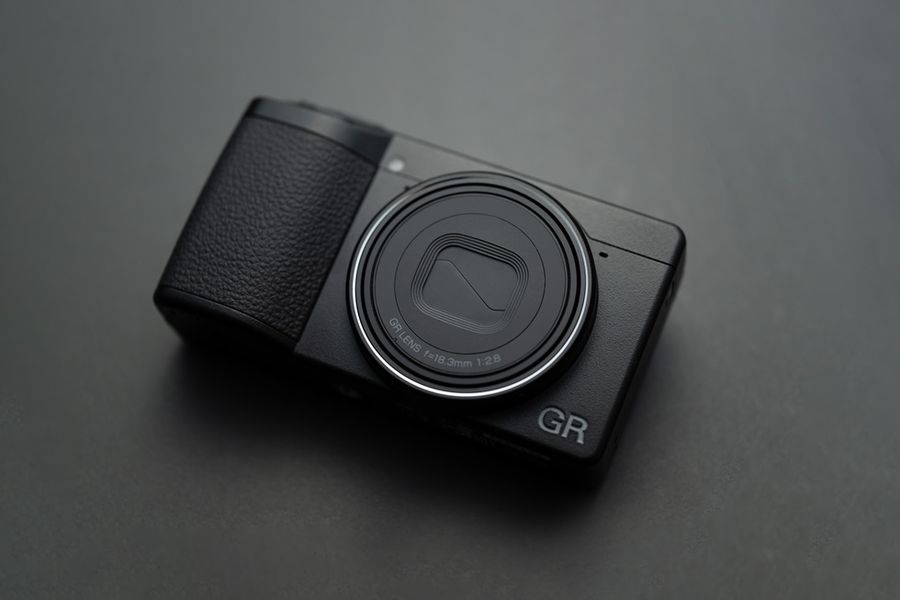
Compact cameras deserve more credit than they get if the honest answer to “what will you actually shoot” is family photos and travel, not learning manual exposure from scratch. You give up interchangeable lenses, sure, but you gain a camera that's actually small enough to be in your pocket when something worth photographing happens.
Kit Lens vs Body Only: What to Actually Buy First
Most beginner-friendly bodies get sold as a kit with a basic zoom lens thrown in, and for a first camera, that's usually the right call. A kit lens is cheaper bundled than bought separately, and it covers enough range that you'll actually work out which focal lengths you gravitate toward.
Skip the kit lens only if you already know exactly what you want to shoot, and it's something a kit lens genuinely can't do, fast low-light portraits, say. Everyone else should start with the kit lens and spend the savings on a second lens once they actually know what's missing from it.
New vs Used: Where You Can Actually Save Money Safely
Camera bodies depreciate fast, and that actually works in a beginner's favour. A lightly used previous-generation body is often better value than the newest entry-level model, since you're getting features that were flagship a few years back for a fraction of what they originally cost.
The catch is making sure you're buying from somewhere that actually backs the warranty. Grey import stock, sold without local authorisation, often comes with zero local warranty support, and that matters a lot more on a used body than a new one, since there's less runway before something needs a repair.
What to Budget for Beyond the Camera Body
The camera body is rarely the whole cost, and it's worth budgeting for that upfront. A decent memory card is non-negotiable, and it's worth buying one actually rated for the burst shooting and video your camera can do, rather than grabbing whatever's cheapest on the shelf.
A spare battery is another easy thing to forget. Mirrorless bodies especially tend to chew through battery faster than DSLRs, and running out mid-shoot is such a common first-camera mistake that a fifty-dollar spare fixes it completely.
Find Beginner Cameras at C.R. Kennedy
If you'd rather have specific models than a framework, our current picks for best beginner cameras runs through what we'd actually recommend right now. For a compact option, Ricoh compact cameras like the GR series are a genuinely popular choice among photographers who want something pocketable without giving up on image quality. Get in touch with our team if you want a hand matching a first camera to what you're actually planning to shoot.
