

Beginner Camera Buying Guide
What Is a Telephoto Lens? A Practical Guide
What Is a Telephoto Lens, and How Does It Work?
A telephoto lens lets you fill the frame with something you can't walk up to. That's the definition most photographers actually work with day to day, even if it's not the technical one, and the gap between the two matters more than you'd think once you're comparing options. “Telephoto” stretches from a 70mm portrait lens all the way to an 800mm wildlife monster, and those two ends of the spectrum barely have anything in common. Here's what actually makes a lens telephoto, which focal lengths suit which kind of shooting, and what you give up once you start going long.
What Actually Makes a Lens "Telephoto" (Not Just "Long")
Telephoto is technically an optical design, not a focal length range. A true telephoto uses a rear lens group with negative optical power, which lets the barrel be physically shorter than the stated focal length. Skip that group and a 400mm lens needs an actual 400mm of barrel to focus at infinity, which is exactly why the long lenses built before this trick existed were absurd, unwieldy things.
Nobody really enforces that distinction anymore, and that's fine. Any telephoto lenses from about 60mm up gets lumped in as telephoto, whether it technically qualifies or not, and honestly, that's the right way to think about it when you're buying. What matters is the focal length and what it lets you shoot, not the optical formula behind it.
Telephoto vs Zoom vs Prime Lenses
Telephoto describes focal length. Zoom describes whether that focal length is fixed or adjustable, and the two get mixed up constantly, mostly because most telephoto lenses people actually buy happen to be zooms. Plenty of telephoto primes exist too. An 85mm, a 135mm, a 400mm, a 600mm: all telephoto, all fixed.
That fixed-vs-variable trade-off bites harder at telephoto lengths than it does at wide angle, since a zoom has more optical compromise to cover over a longer range. If you're weighing the two up, the difference between prime and zoom lenses really comes down to aperture speed, weight, and how happy you are to walk rather than zoom to reframe a shot.
Common Telephoto Focal Lengths and What They're Best For
Not every telephoto lens does the same job. Focal length sets your working distance, and working distance tends to decide what kind of photography a given lens actually suits.
70–200mm lenses
100–400mm lenses
85mm and 135mm Portrait Prime lenses
600mm+ Super-Telephoto Prime lenses
This is the workhorse lens that most event, sports and portrait shooters reach for first. A fast, constant aperture keeps it usable in a dim gym or an evening reception, and 200mm is roughly where most people hit the ceiling of what they can comfortably shoot handheld.
Here you're trading aperture speed for reach. A 100-400mm usually sits at f/4.5-6.3 rather than a constant f/2.8, but that extra 200mm at the long end is the difference between a usable wildlife shot and a subject that's basically a dot. It's become the default for birders and safari shooters who don't need studio-fast glass.
Both sit at the short end of telephoto, and both do one thing brilliantly: flattering compression on a face, with none of the distortion a 35mm or 50mm introduces when you get in close. Wide apertures like f/1.4 or f/1.8 also mean you can throw the background into soft blur without crowding your subject, something a slower zoom at the same focal length just can't do.
Past 400mm you're in specialist territory: bird photography, distant wildlife, astro work, anything where every extra millimetre of reach earns its keep. These lenses are big, heavy, and usually carry the slowest apertures in a brand's lineup, and that's a deliberate trade-off. Without it, the size and the price tag would both be unworkable.
Best Telephoto Lenses to Choose
There are countless telephoto lenses on the market to choose from. With so many options, how do you know which one to choose? Here are three of the best-selling telephoto lenses available from C.R Kennedy:
Pentax D FA 70-200mm f/2.8 ED Lens
Sigma 100-400mm f/5-6.3 DG DN OS Contemporary Lens
Zeiss Batis 135mm f/2.8 Lens
Weather sealed and optically precise, the Pentax D FA 70-200mm f/2.8 ED Lens is one of the best lenses on the market. The Pentax has a bayonet hood and a long petal configuration that snaps easily into position and helps eliminate flare without darkening the edges of your image. The hood also comes with a removable section that allows you to enable the filters without removing the lens.
Each lens comes with a clutch mechanism that allows you to manually focus the adjustments. The lens also comes with various modes of operation, including the ability to limit your focus within a selected range, greatly improving the speed and accuracy of the autofocus.
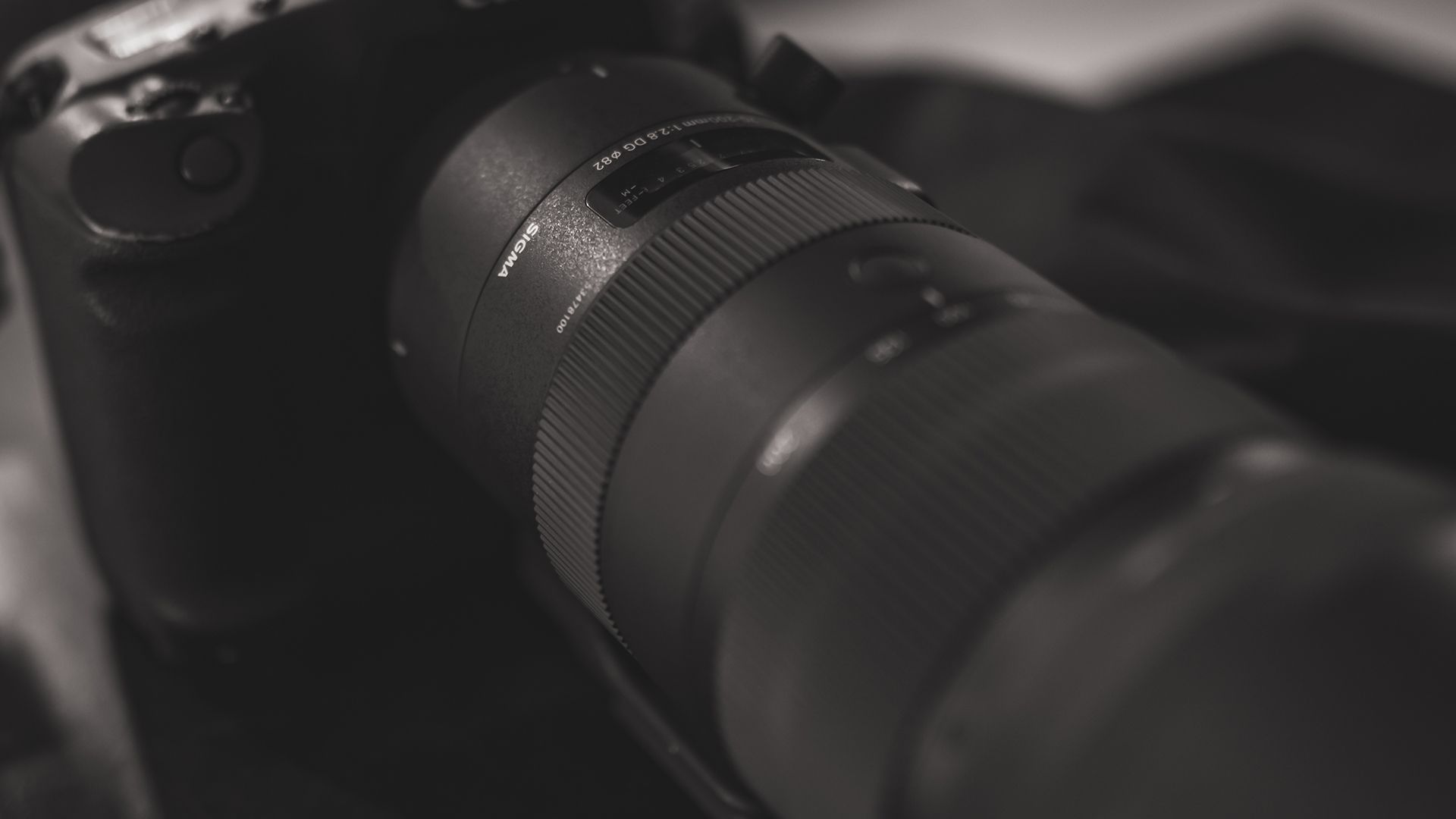
Another quality lens is the Sigma 100-400mm f/5-6.3 DG DN OS Contemporary Lens. It’s sturdy and durable but has a lightweight construction that allows for flexibility. Designed for mirrorless cameras, it seeks to strike a balance between weight, size and optical performance. The lens also comes with an optional tripod mounting ring, allowing for maximum stability while photographing subjects.
The lens also features excellent optical stabilisation for when you need to go handheld.
The Zeiss Batis 135mm f/2.8 Lens is very light and compact prime lens, allowing for flexibility without making a compromise on image quality.
While many 135mm lenses feature faster apertures, this is often at the expense of size and weight, making this lens ideal for those looking for excellent portraits without sacrificing portability.
Why Telephoto Lenses Compress Perspective and Isolate Subjects
The ‘background compression’ telephoto lenses get credit for isn't actually about focal length. It's about how far you're standing from your subject. Step back and zoom in to hold the same framing, and everything behind your subject, which hasn't physically moved, suddenly looks bigger and closer together than it would if you'd walked up close with a wide lens.
Depth of field follows the same logic. Match the framing and a longer lens shot from further back will blur the background more than a wide lens shot up close at the same aperture. That's why an 85mm at f/2.8 melts a background that a 24mm at f/2.8 barely touches.
The Trade-Offs: Weight, Light and Stabilisation
Reach costs weight, full stop. A 600mm f/4 can top 3kg on its own, and even a mid-range 100-400mm demands two hands and decent technique to hold steady. Camera shake also gets amplified the longer you go. The old rule of thumb is a shutter speed of at least 1/[focal length] to avoid visible blur handheld, so a 400mm lens wants 1/400s or faster unless stabilisation is picking up the slack.
Past 300mm, or for video at any telephoto length, a decent tripod or monopod is what stops fatigue turning into shake by the end of a long session. Worth knowing about too: teleconverters. A 1.4x or 2x extender adds reach without buying a whole new lens, but you'll pay for it in a stop or two of light and slower autofocus: great in good light, less great when things get marginal.
Long lenses also make you notice things a wide lens would never show you. Heat shimmer rising off a football field or hot bitumen can visibly soften a 400mm shot on a warm afternoon. Shoot the same scene at 24mm and you'd never know it was there.
Matching a Telephoto Lens to Your Camera System
Sensor size changes what a given focal length actually gives you. Put a 300mm lens on a full-frame body and you get a 300mm field of view; put it on an APS-C body and it behaves more like 450mm, and on Micro Four Thirds it's closer to 600mm. If you're a wildlife or sports shooter working to a budget, a smaller sensor can be the cheapest way to buy yourself extra reach without paying for exotic glass. Our crop sensor vs full frame guide runs through the maths properly.
That extra reach isn't free, though. You give some of it back in low-light performance and depth-of-field control. Full-frame still has the edge for portrait and event work, where background blur matters more than raw distance. Neither system is objectively better here; it's just a genuine trade-off, and which side of it you land on depends on what you actually shoot.
Lens mount matters more here than anywhere else in your kit. Long telephoto glass is expensive enough that buying native for your mirrorless camera system almost always beats adapting an older DSLR lens onto it. Adapted glass can work fine, but autofocus speed and tracking reliability are usually the first things to give, and both matter a lot more when your subject is moving at 400mm than when it's sitting still at 50mm.
Find Telephoto Lenses at C.R. Kennedy
C.R. Kennedy is an official Australian distributor for several telephoto lens manufacturers, so every lens you buy through us comes with local warranty and proper support behind it. Our range runs from Sigma telephoto lenses, including the affordable Sigma 100-400mm f/5-6.3 DG DN OS Contemporary right through to their sports-grade Sport-series glass, to Pentax telephoto lenses for DSLR shooters who want weather-sealed reach. If you're not sure which focal length or mount suits what you shoot, get in touch with our team before you buy.
Last Updated: 05/10/2026
